ART HISTORY TITBITS RELATING TO OUR WEEKLY THEMES - WRITTEN (unless specified) BY HAYLEY WHITTINGHAM
Madonna
The Madonna and child, Holy trinity, Annunciation and Nativity are all scenes you might find on the walls of a church. But the iconography of religious artwork has become so ingrained that we see it being borrowed in works that are not intended for an explicitly religious purpose. Many non-religious artists refer back to the bible stories they were taught as a child in school as a source for creative imagination.
‘Take your son, Sir’ (1851-6) is a painting by Ford Maddox Brown. It shows his second wife with their new born son. The seated symmetrical pose recalls traditional Madonna and child paintings. The circular mirror behind her head stands in for the traditional gold halo, whilst the starry wallpaper suggests the heavens. Despite this, the use of the artist’s own family as models and the domestic setting indicate that this is not simply a rendering of Mary and her infant Jesus, but a scene from contemporary life. The viewer is implicated as father, reflected in the mirror behind. The mother’s strained expression suggests that this is not a conventional celebration of marriage and motherhood. This may be explained by the death of their son at ten months, which is likely why the painting remains unfinished. Some interpret it as a more confrontational image, in which an abandoned mistress presents her baby to its father. This would have been a popular subject in Victorian pre-Raphaelite painting which valued a moral message. The painting displays a deliberate paradox between new life and death.
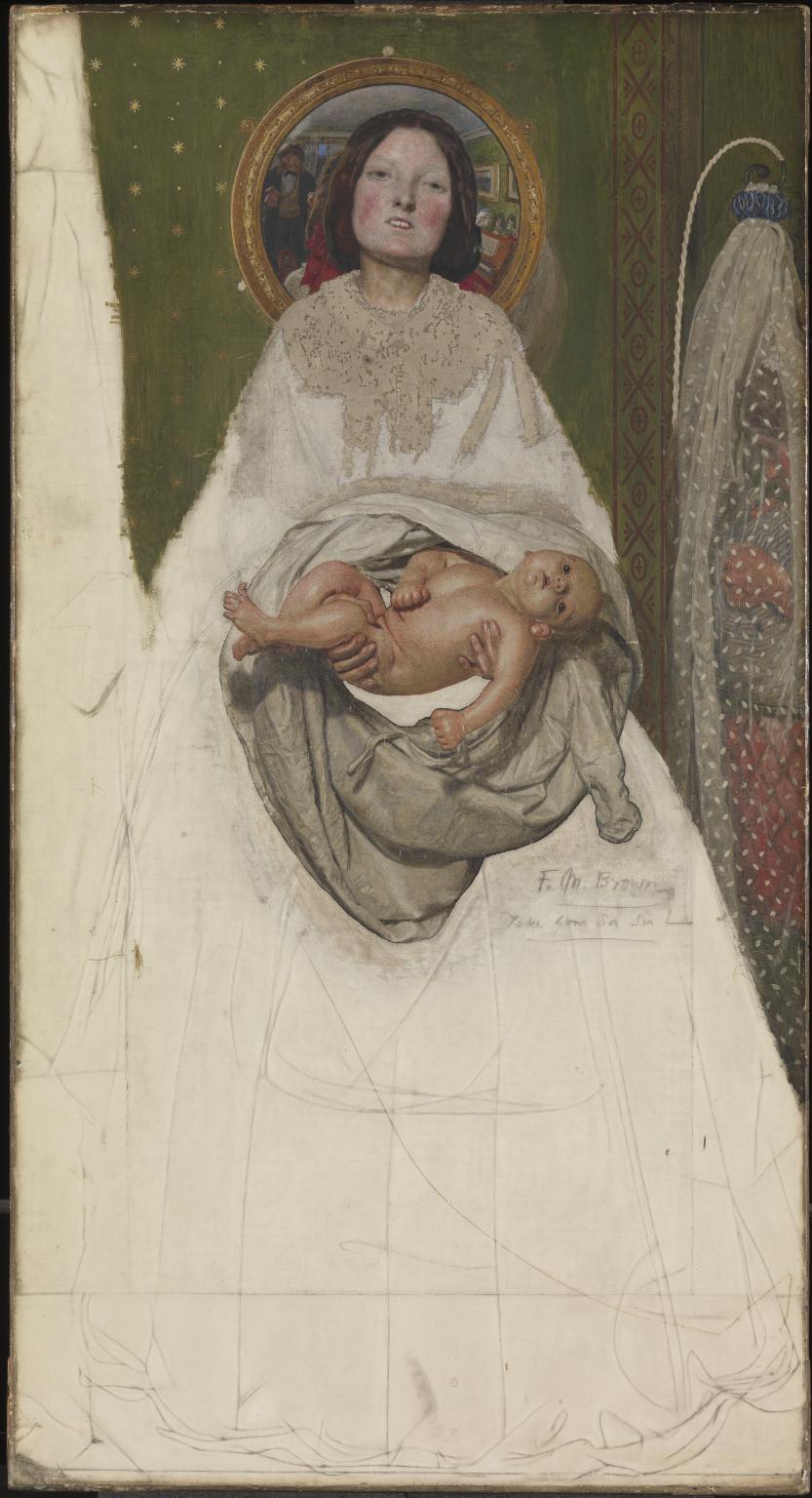
Ford Maddox Brown, Take your son, Sir, 1851-6.
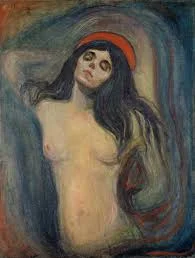
‘Madonna’ is the title given to several paintings by Edvard Munch, depicting a half-length female nude figure with flowing black hair. Based on the title and red halo it was possibly intended to represent the Virgin Mary. She embodies some of the conventional aspects of the Annunciation scene, in her quiet and calm confidence, her closed eyes expressing modesty and her body twisting away from the light. However these references are disputed as Munch was not known to be a Christian. He may be drawing upon an affinity to Mary to emphasise the beauty and perfection he saw in his model, and as an expression of worship of her as an alternative ideal of womanhood. The flowing black hair, pale skin, red lips and nudity give her a vampiric appearance and suggest she may represent the femme fatale - the strong woman who reduced man to subjection through seduction. Her dual gesture of surrender and captivity in her arms behind her back serve to mitigate this assertion of female power. These undertones of sensuality and death invert the portrayal of the virgin mother.

Edvard Munch, Madonna, 1895.
As a devout Christian, Eric Gill often used religious imagery in his work. His life was marked by a tortuous religious exploration and he converted to Catholicism in 1913. He made many compositions on the subject of the mother and child, in both sculpture and wood engraving, but with a stylised modern twist. He was part of a new artistic generation that heralded the development of modern British sculpture. His Madonna and Child of 1919 is typical of the erotic religiosity that Gill employed to add a new and compelling dimension to the traditional subject of Madonna and Child. The figures are simplified and geometric, and the profile of their faces is represented by a single eye. Despite this modern simplification, the halos and the curved geometry of the figures recall Byzantine icon painting, used as an object of veneration in Orthodox churches and private homes in the Eastern Roman Empire. It placed an emphasis on symbolism over naturalism, and conformed to strict canons of representation in order to manifest the unique presence of the figure depicted.
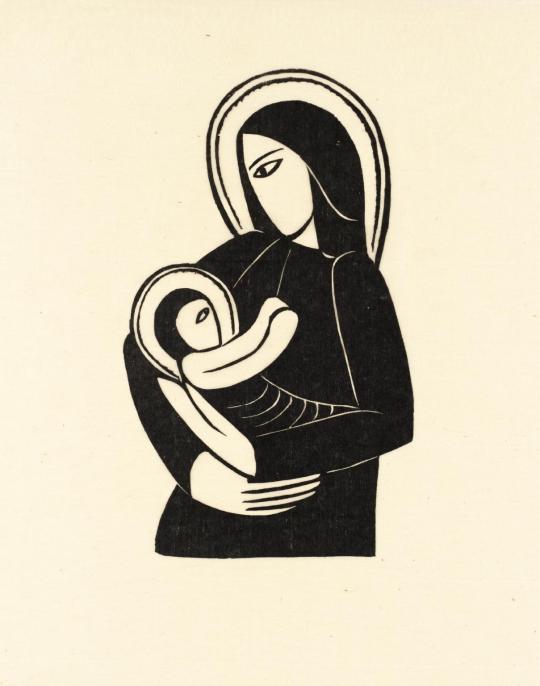
Eric Gill, Madonna and Child, 1919
Vanity
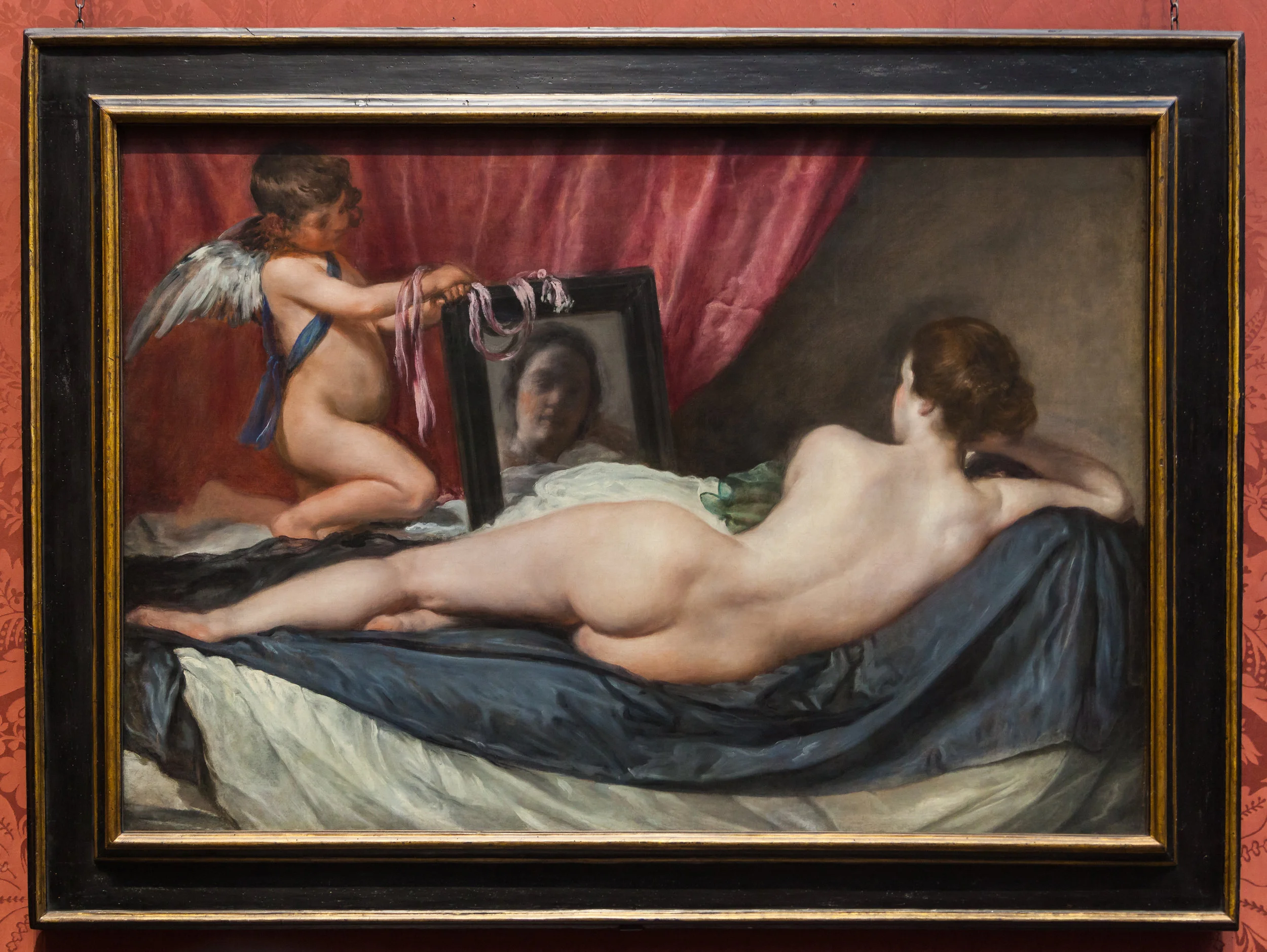
Traditional Vanitas paintings originating in the 16th and 17th centuries are still-lifes intended to remind the viewer of their mortality and of the worthlessness of worldly goods and pleasures. Symbols of vanity include jewels, gold coins, and often a skull or the figure of death himself alongside decaying fruit or flowers. During the Renaissance, vanity was represented as a nude woman, serving as a warning of the ephemeral nature of youthful beauty and the inevitability of death. She is often depicted attending to her hair or looking into a mirror, as in the Rokeby Venus by Velazquez. In this instance her reflection is said to appear much older than her body, a warning of the ephemerality of beauty. Venus was regarded as the most beautiful of the goddesses and often seen as the personification of female beauty. This meant she lent herself to representation of Renaissance ideas of vanity, which included taking pleasure in one’s own appearance, demanding admiration and a sense of superiority.
As John Berger explains, there is more behind such representations of women in front of mirrors than meets the eye. He addresses the male artist; “You painted a naked woman because you enjoyed looking at her, put a mirror in her hand and you called the painting ‘Vanity,’ thus morally condemning the woman whose nakedness you had depicted for you own pleasure.” In doing so, the artists invites the viewer to participate in her condemnation, thus offering them full permission to behold her with guilt-free desire. This led the painting to become a target for suffragette Mary Richardson in 1906, who slashed its surface five times with a meat cleaver. In fact if Venus were admiring herself in the mirror it would not be possible for us to see her reflection from our position – what she would actually see is us looking at her. This phenomenon has been titled 'the Venus effect’.

Velazquez, The Rokeby Venus, 1651.
The Pre-Raphaelites were a group of painters who had a particular interest in vanity. They often portrayed women with loose flowing hair, when in reality it was only worn this way by children; it was customary for adult women to braid or pin their hair up meaning it was only visible when dressing or undressing. Its appearance in art has therefore an intimate, erotic significance. This is the case for Rosetti’s 'Lady Lilith’, a woman known as the first wife of Adam, associated with the seduction of men. She is shown as a “powerful and evil temptress” with harsh facial features. According to a sonnet that Rosetti wrote and inscribed on the frame, Lady Lilith represents the beauty of the body, whilst a companion painting 'Sibylla Palmifera’ represents the beauty of the soul. This suggests that Lady Liliith functions in part as a vanitas, reminder of the ephemeral nature of bodily beauty. Although Lilith is a mythological figure, Rosetti’s painting depicts her as a modern woman, contemplating her own beauty in a handheld mirror. She epitomises the rising trend of the narcissistic female figure in art. However unlike Velazquez’s Venus, Lilith is a powerful, threatening, sexual woman who resists domination by men. This has led her to be considered a symbol of the feminist movement.

Rossetti, Lady Lilith, 1866.
Aubrey Bearsdleys 'Toilette of Salome’, created 40 years later is more of a celebration rather than a condemnation of vanity. Like Lady Lilith, Salome’s vanity goes hand in hand with great power over men. She famously seduced Herod through her dancing in exchange for the head of John the Baptist. Decadence, a prevailing feeling of the time that characterised the drawings of Beardlsey, was concerned with cosmetics, artifice and self-presentation. These themes are all present here. Salome sits naked at her dressing table enjoying the attentions of a masked barber as she prepares for her dance. As in Rosetti’s work, attention to the hair is used to portray vanity. In the same series is 'The peacock skirt’ (peacocks being another conventional symbol of vanity), indicative of Salome’s obsession with her seductive power. The works are reflective of a modern society grown over-luxurious and sophisticated, and one in which Beardsley himself participated as a dandy. Although this means that the work is not directly critical, its anticipation of Salome’s eventual death as a result of her vanity once more links it to the traditional vanitas - reminder of the inevitability of death.

Aubrey Beardsley, The toilette of Salome, 1906.
Art inspired by music
Charles Baudelaire believed that all the arts are linked, as seen in the ability of colour to inspire musical thinking – we speak of colour in terms of harmony and line in terms of rhythm. This relationship works both ways, evidenced by a plethora of visual artists who were inspired by music.
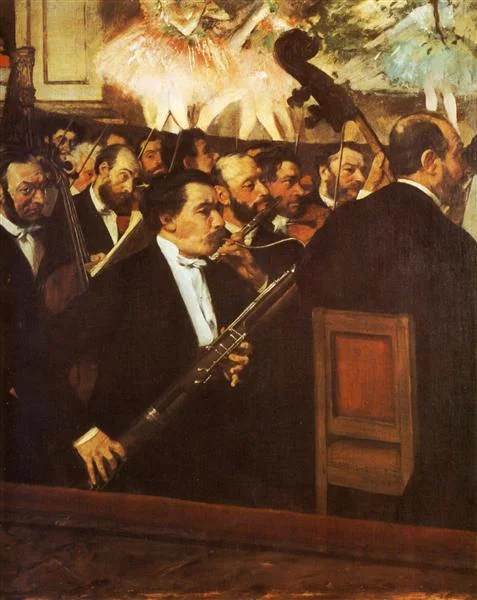
Although Degas is known for his paintings of dancers, In ‘The Orchestra of the Opera’, he takes the musicians in the orchestra pit as his focal subject, many of whom he knew personally. In doing so he obscures the main event taking place on the stage above which would typically be prioritised in a painting. The composition is dramatically cropped, foreshadowing his passion for photography. It captures the sense of a snapshot of a busy opera, and intersecting instruments such as the head of a double bass connect the spaces of audience and stage and position the viewer as a member of the audience. Charles Stuckey compared the viewpoint to that of a distracted spectator at a ballet, and says that it is Degas’ fascination with the depiction of movement, including the movement of a spectator’s eyes during a random glance, that makes him an impressionist. Whilst the musicians are treated as group portrait and their instruments accurately depicted, the legs and tutus of the dancers above are treated much more loosely like a quick study. In this way Degas blurs the distinction between genre painting and portraiture.

Degas, The Orchestra of the Opera, 1869
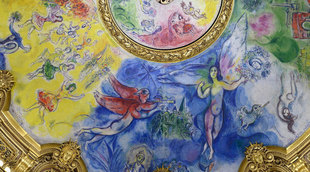
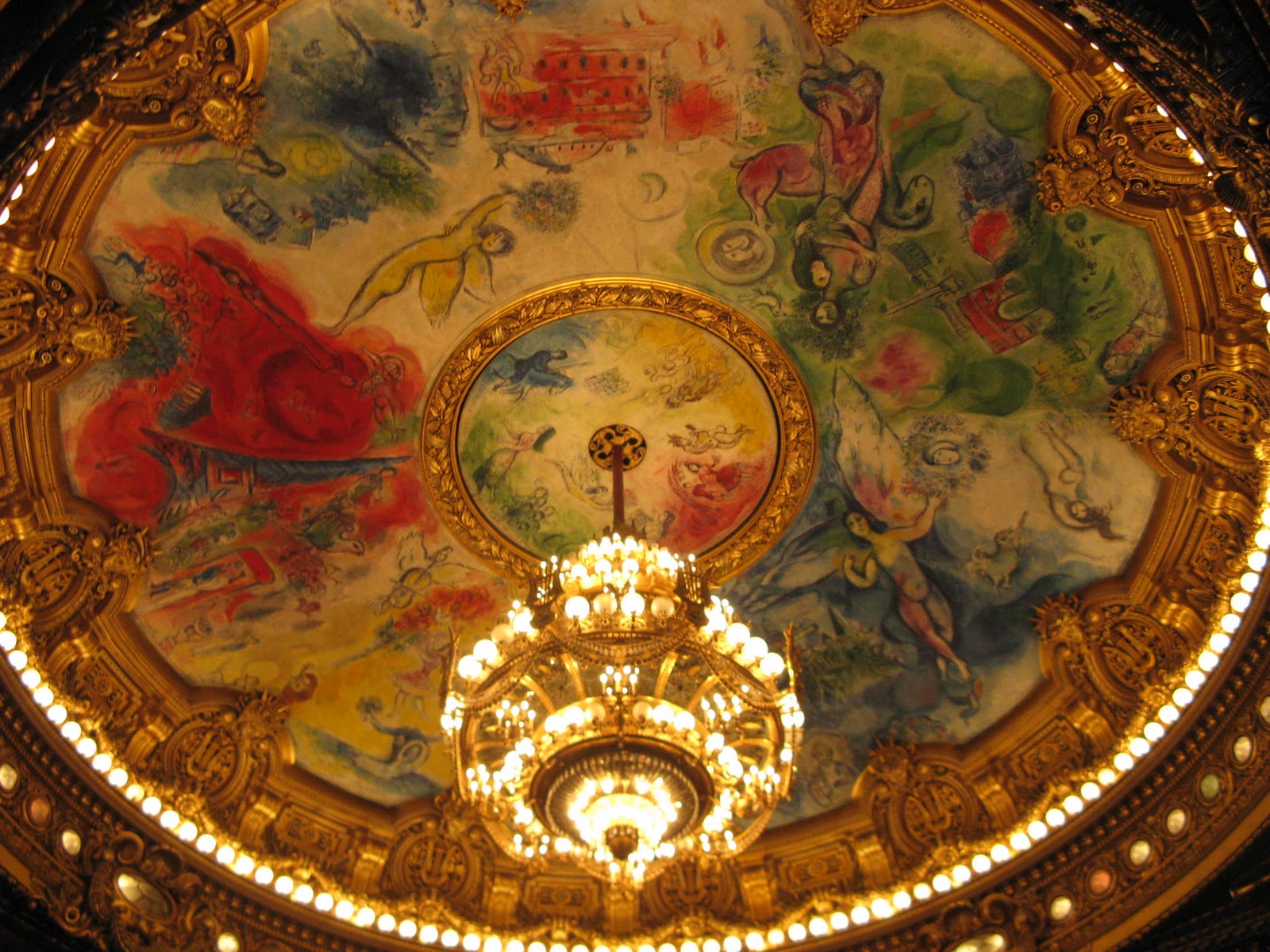
Chagall’s musical inspirations went deeper than the representation of musicians. They are expressed in his choice of colours and application of paint. He loved Bach and Mozart, and was also a big jazz fan. Connections between music and art in his work were extended by his creation of the sets for the New York Ballet, including the colourful performance of ‘The Firebird’. His painted ceiling of the Paris Opera house was a 2,600-square-foot canvas covered in 440 pounds of paint. Music inspired the composition and colour intensity as well as the subject matter, commemorating contemporary and historic composers, actors and dancers. He said ‘Colour is vibration like music. Everything is vibration.’ He channelled this by listening to music, with a particular preference for Mozart’s Magic Flute during the painting of the Paris Opera House ceiling, having designed the sets and costumes for the 1967 Metropolitan Opera production of the piece. It is represented in a commemoratory panel to Mozart - a giant angel fills the blue sky while a funny-looking bird plays the flute.
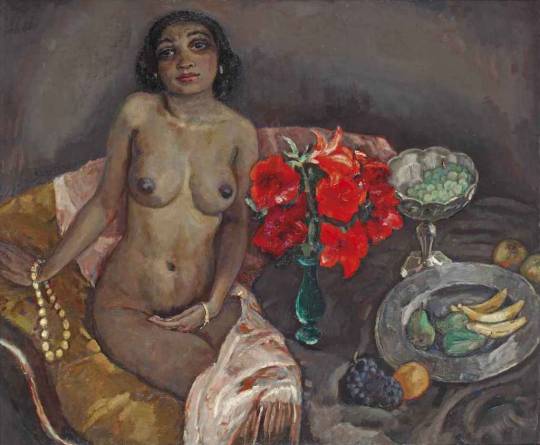
Scottish colourist J.D Fergusson was particularly inspired by music and the idea of rhythm. Rhythm was the title of an arts periodical launched in 1911, of which Fergusson was art editor. The cover design was a reworking of one of his paintings, also known as ‘Rhythm’, which depicts a seated female nude. For Fegusson, rhythm meant a vital energy and harmony seen in nature, represented by woman as the source of natural life. Ideas of rhythm also come across in his bold use of line and repeating curves, creating the dynamic forms of the figure and background. Like Chagall, Fergusson took inspiration from the meeting of music and art in ballet, in this case the Ballets Russes which were taking France by storm from 1909-11. Elizabeth Cumming compared his paintings’ themes of surging nature, primitivism and expressive sexuality to Stravinsky’s Rites of Spring.
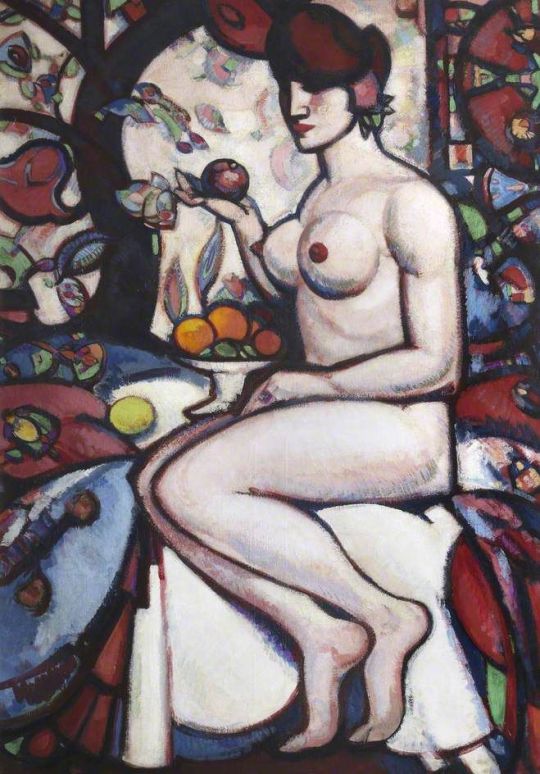
J.D. Fergusson, Rhythm, 1925
Inner Animal
Where does the boundary lie between animal and human? Can the transformation of human into animal be positive as opposed to the frightening werewolves of horror stories?
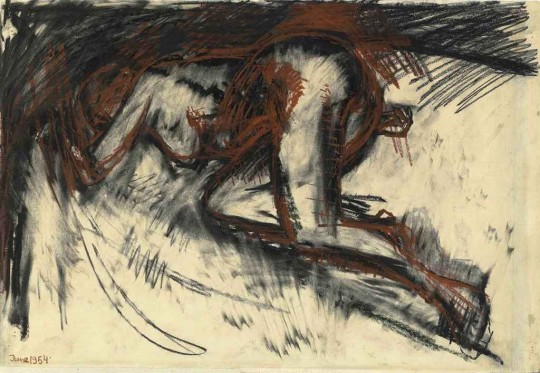
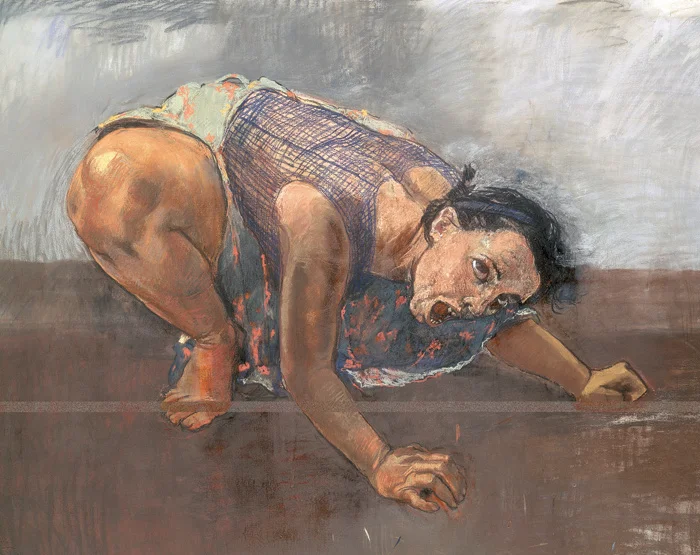
Paula Rego’s ‘Dog woman’ was inspired by a story that a friend had written for her. She depicts women behaving like dogs in monumental poses, including howling at the moon, grooming and sleeping on her owners coat. Her use of pastels connects her work to the raw physicality of Degas women, relishing the resistance they give against the paper surface and eliminating the distance from the work that comes with a brush. The work challenges accepted feminine behaviour and conventions of representation. She explains; “To be a dog woman is not necessarily to be downtrodden; that has very little to do with it,” She explained, “In these pictures every woman’s a dog woman, not downtrodden, but powerful. To be bestial is good. It’s physical. Eating, snarling, all activities to do with sensation are positive. To picture a woman as a dog is utterly believable.“ A dog is a unique animal in its juxtaposition of the domestic and the wild, and parallels can be drawn with the lives of women – they learn behaviours from those around them but maintain a strong bodily independence. Casting a woman as a dog emphasises this physical side of the body. Rego says that the series of works is about the love she had for her husband Victor Wiling – having become the obedient wife herself, she explains how female students at the Slade were groomed to become the muse or empathetic partner of a male artist, which perhaps has something in common with the relationship between dog and owner. Although she used a model named Lila, with whom she had a very close relationship, she says that her model stands in for herself and the scenes depicted are based on personal stories. She first instructed Lila to ‘crouch there and growl’ and the resulting image gave way to a recurring theme.

Paula Rego, Dog Woman, 1994.
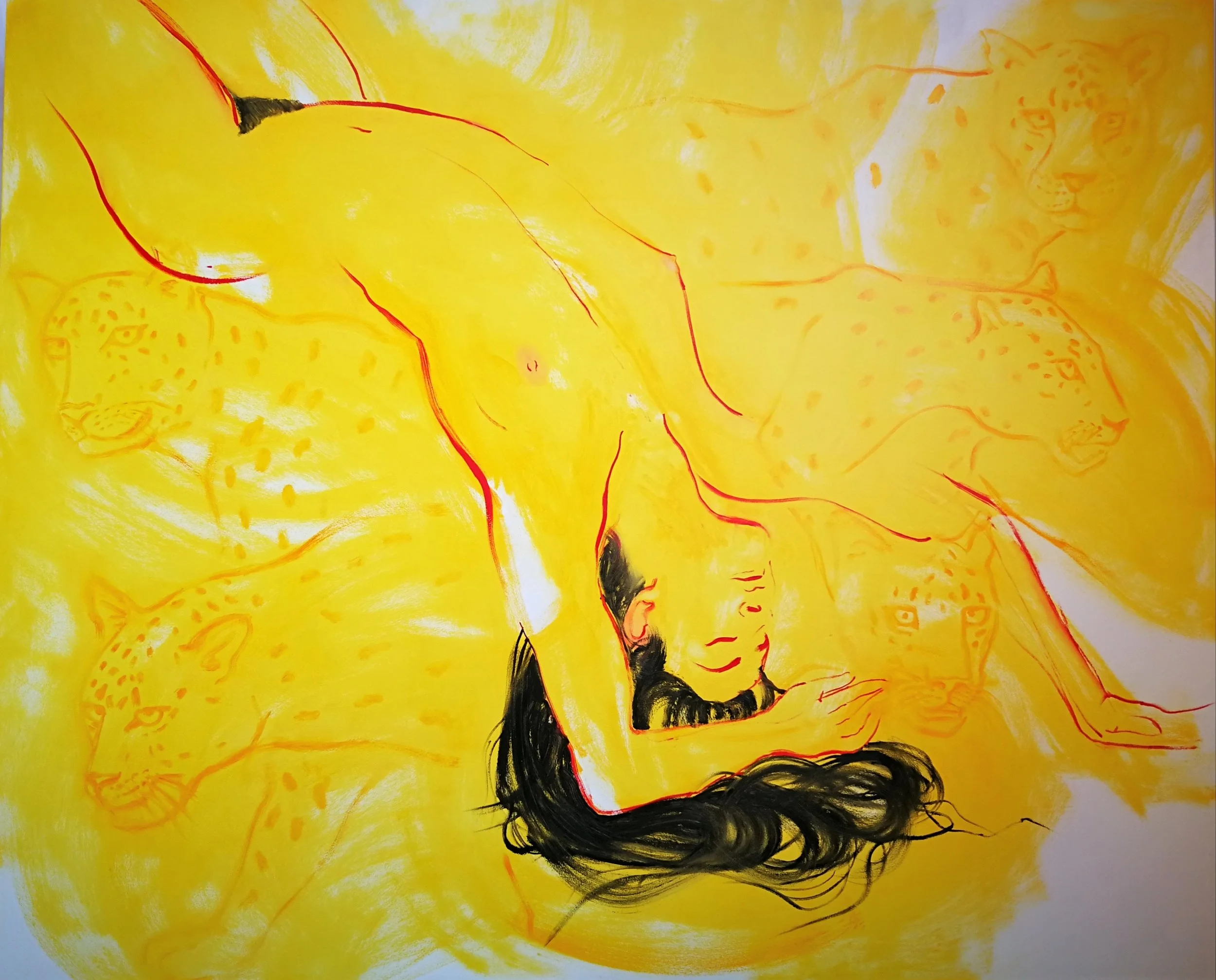
Eileen Cooper’s work most commonly features female nudes alongside animals, and there is an interesting lack of differentiation between the two. Both are painted with expressive and primitive qualities using line, so that animal approaches human and human approaches animal. The work encapsulates universal themes such as the dynamics of family relationships, female sexuality, fertility, motherhood, creativity and life and death. Like Paula Rego, Cooper paints women in unconventional poses, defying expectations of feminine grace for an animalistic physicality – A woman crouches naked on her studio floor to paint, her shoes cast aside as if to give way to her inner animal – the animalistic side of creativity. It could be said that these are women who are truly naked as opposed to performing ‘the nude’ as an art form. Imagination plays a large role in the conception of Cooper’s images - ‘I love the idea that the studio is the kind of place you might get a tiger walking through.’ Tigers are a recurring feature of her painting – As a woman stands on her head in a simplistic landscape, a tiger floats above her as though it were her spirit animal.

Eileen Cooper, Law of the Jungle, 1989.

Eileen Cooper, Law of the Jungle, 1989.
Sleepwalking
Sleep and dreams are the realm of the unconscious, making them of particular interest to Freudian psychoanalysis and surrealist artists. Sleepwalking can be seen as a physical manifestation of this unconscious. The surrealists believed that the subconscious of sleep could be tapped into and used as a source of artistic creativity. This reached a culmination in automatism, the act of creating art from the unconscious mind. It is a term is borrowed from physiology, where it describes bodily movements that are not consciously controlled like breathing or sleepwalking. Freud used automatism in the form of drawing to explore the unconscious mind of his patients. André Breton who launched the surrealist movement in 1924 defined surrealism as ‘Pure psychic automatism … the dictation of thought in the absence of all control exercised by reason and outside all moral or aesthetic concerns’.
Dali’s ‘Sleep’ could be seen as an attempt to translate the dream world onto canvas. The spindly crutches, a Dali trademark, suggest instability before the inevitable collapse into sleep. The head hangs limply like a body in slumber. Dali said ‘I have often imagined the monster of sleep as a heavy, giant head with a tapering body held up by the crutches of reality. When the crutches break we have the sensation of falling.”’ Apparently Dali saw sleep as time ill-spent, and sought to overcome this drain on his creativity. When he felt sleep coming on he would sit holding a key poised above a metal plate on the floor. As soon as he nodded off the key would slip from his fingers and clang against the plate – waking him immediately. The painting ‘Sleep’ might be a rendering of this sensation and his rocky relationship with sleep.

Dali, Sleep, 1937.
Another surrealist, Rene Magritte explored the theme of sleep and the unconscious in his work. In ‘Reckless Sleeper’ a figure sleeps in a dark cloudy sky, above a stone tablet embedded with seemingly random objects. Magritte’s work often features banal, ordinary objects in extraordinary situations. These objects may represent the dream of the sleeping figure, and can be read as Freudian symbols. Although the equally spaced and clearly illustrated objects are reminiscent of children’s storybooks, there is an atmosphere of unease and disorientation, leading to an alternative comparison with a police crime recreation. The sleeper is contained within a coffin like box, which alongside the stormy sky suggests the painting may be a visual interpretation of a nightmare more than a dream.
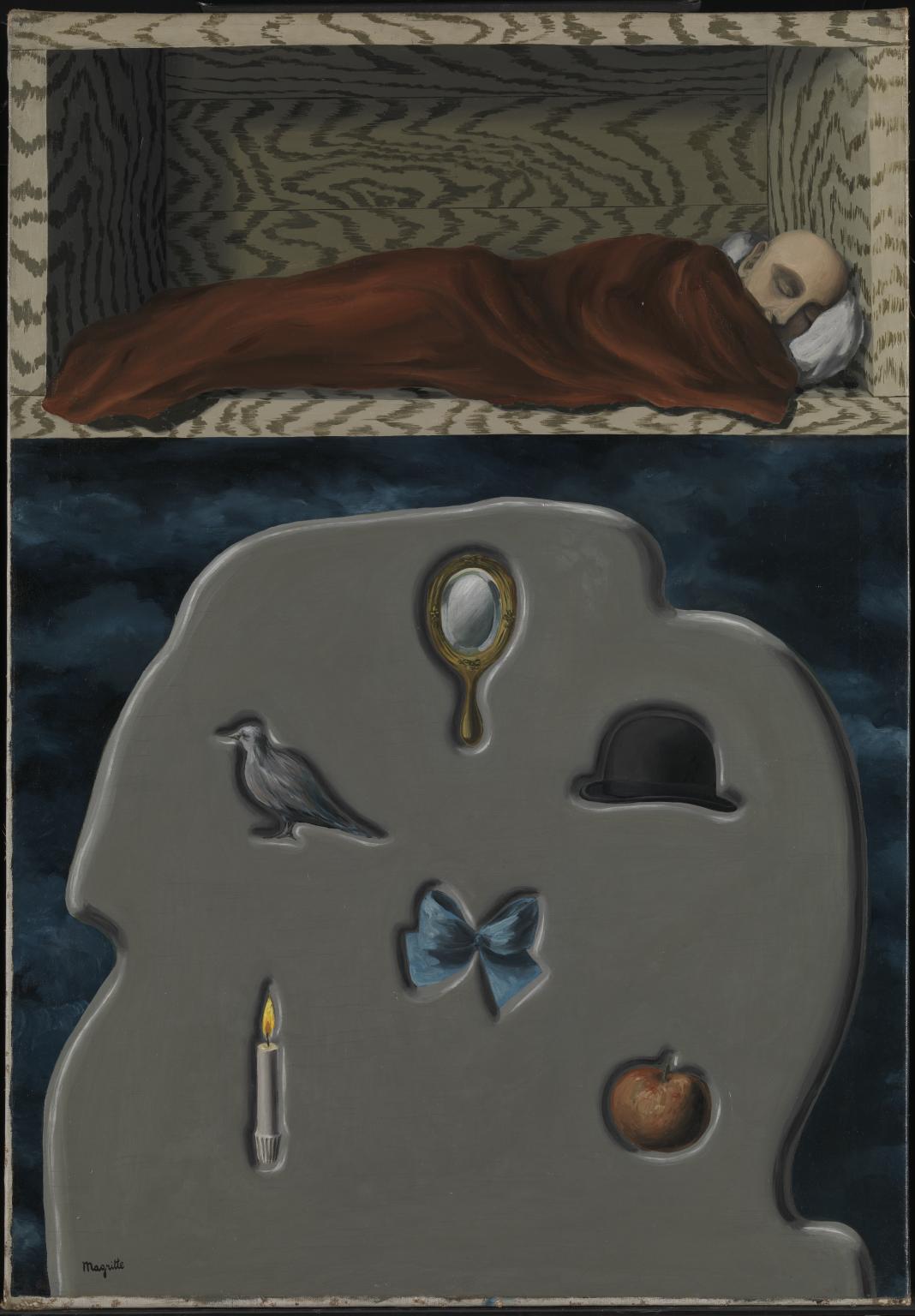
Magritte, The Reckless Sleeper, 1928.
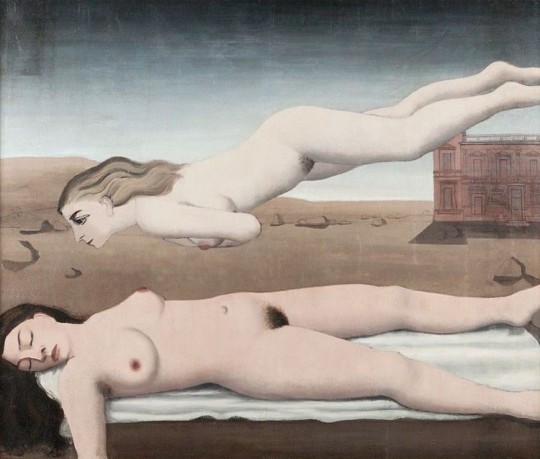
Paul Delvaux’s encounters with contemporaries such as René Magritte introduced surrealistic influences into his work. Like the surrealists, he was interested in exploring humanity and the hidden depths of the subconscious. He expressed this using bizarre subject matter rendered naturalistically rather than abstraction. The believability of his style adds to the uneasy feeling of his scenes. Delvaux didn’t give as much importance to Freud’s psychoanalytic ideas as the surrealists. He stated that he did not aim to paint his dreams but rather “to transcribe reality to make it into a kind of dream.” He was also interested in the relationship with the alter ego. The imagery of ‘The Dream’ brings to mind an out of body experience - that which typically involves a feeling of floating outside of the body or perceiving one’s physical body as if from the outside, initiating a lucid dream state. His use of the woman to represent this is significant as Delvaux’s relations with women were troublesome (he had a domineering mother, a platonic affair and an unsuccessful marriage). Thus he represented women as mysterious and beautiful but unobtainable. ‘The Dream’ could be read as the mystery of the woman’s subconscious mind.

Paul Delvaux, The Dream, 1935.



![Getting [un]dressed](https://images.squarespace-cdn.com/content/v1/5c2034e75417fc423a175501/1546812354542-7HAONZ3KCRZYKTCSW109/Antoine+Watteau%2C+The+Toilette%2C+1717.%C2%A0.jpg)